


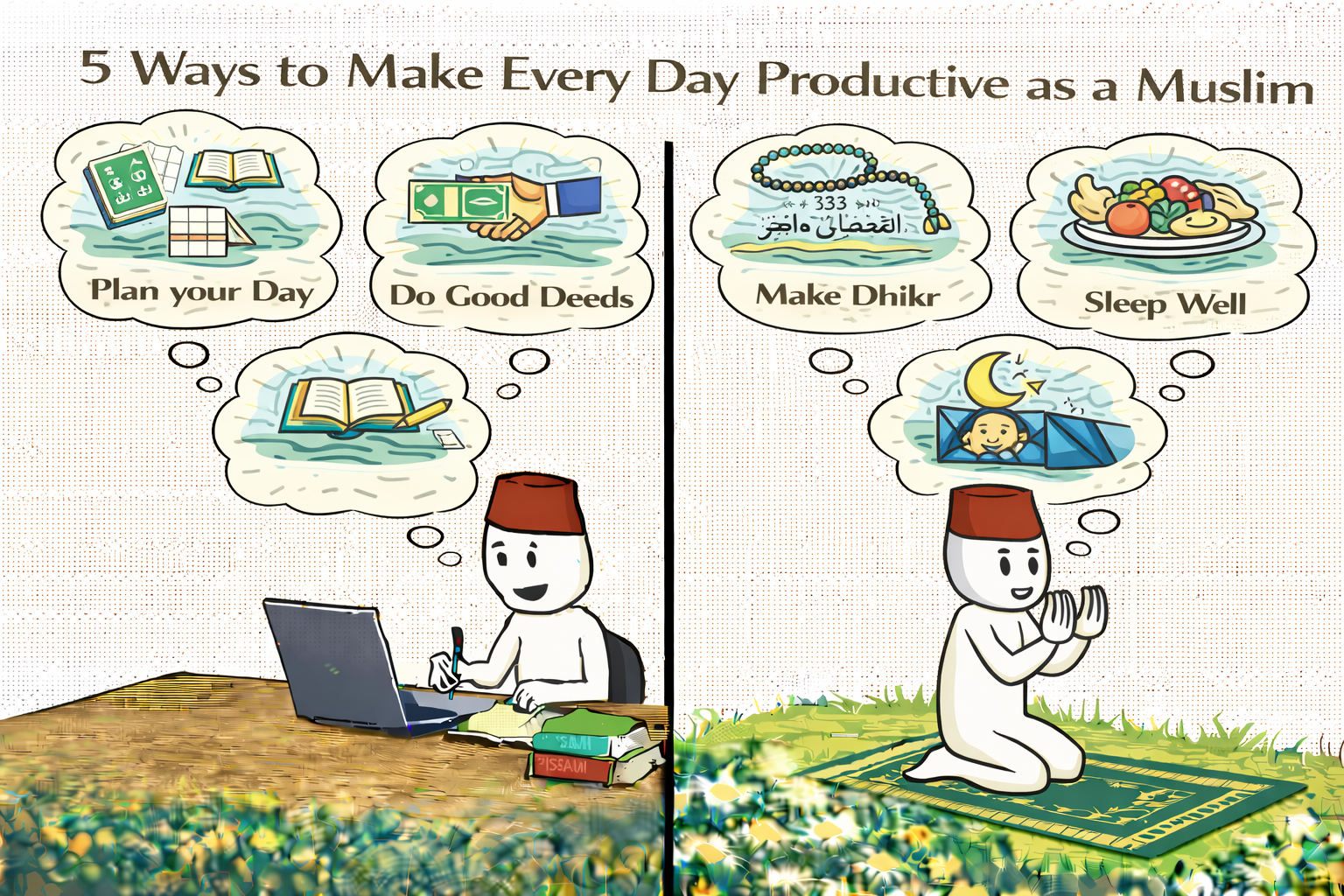

Productivity in Islam is not just about getting more done — it is about living each day with purpose, barakah, and intention. A truly productive day is one that brings us closer to Allah while also fulfilling our responsibilities in this world.
Every day is a gift and an opportunity to grow, improve, and earn reward. When we align our daily routine with our faith, even ordinary tasks become meaningful acts of worship.
The Prophet ﷺ said:
“There are two blessings which many people waste: health and free time.”
(Sahih al-Bukhari)
Here are five ways to make every day productive as a Muslim.
1. Start Your Day with Fajr and Dhikr
The way you begin your day sets the tone for everything that follows. Waking up for Fajr and starting your morning with the remembrance of Allah brings barakah into your time.
Use the early hours to:
- Pray Fajr with focus
- Make dhikr and du’a
- Read a portion of the Qur’an
The Prophet ﷺ made du’a for blessings in the early hours, making this time especially valuable.
Starting your day spiritually grounded creates clarity, discipline, and calmness.
2. Set Clear Intentions for Your Day
In Islam, intention (niyyah) transforms everyday actions into acts of worship.
Before starting your day, take a moment to set your intention:
- Working to provide halal رزق
- Studying to benefit others
- Taking care of family for the sake of Allah
This mindset gives purpose to everything you do.
The Prophet ﷺ said:
“Actions are judged by intentions.”
(Sahih al-Bukhari)
With the right intention, even routine tasks become rewarding.
3. Structure Your Day Around Salah
Salah is not just an obligation — it is a natural framework for your day.
Each prayer acts as a checkpoint that helps organize your time:
- Fajr to begin your day
- Dhuhr to reset midday
- Asr to refocus
- Maghrib to wind down
- Isha to end with remembrance
When your day revolves around Salah, your time becomes more structured and balanced.
It also ensures that no matter how busy you are, you stay connected to Allah.
4. Balance Dunya and Akhirah
A productive Muslim balances both worldly responsibilities and spiritual growth.
Islam encourages excellence in both areas:
- Work or study with sincerity and effort
- Dedicate time for worship and reflection
Avoid extremes — neither neglect your worldly duties nor your spiritual obligations.
“And seek, through that which Allah has given you, the home of the Hereafter, but do not forget your share of the world…”
(Surah Al-Qasas, Verse 77)
Balance brings peace, fulfillment, and barakah.
5. End Your Day with Reflection and Gratitude
A productive day does not end with tasks completed — it ends with reflection.
Before sleeping, take a few moments to:
- Reflect on how you spent your time
- Seek forgiveness for mistakes
- Thank Allah for your blessings
This practice of muhasabah (self-accountability) helps you improve daily.
Gratitude keeps your heart content, while reflection keeps you growing.
Final Reflection
A productive life in Islam is not measured by how busy we are, but by how purposeful we are.
By starting the day with worship, setting intentions, structuring our time around Salah, balancing dunya and akhirah, and reflecting at night, we can transform every day into something meaningful.
Every moment becomes an opportunity to earn reward and draw closer to Allah.
“By time, indeed, mankind is in loss — except for those who believe and do righteous deeds…”
(Surah Al-‘Asr, Verses 1–3)
May Allah bless our time, grant us productivity with purpose, and fill our days with actions that bring us closer to Him. 🤲✨