


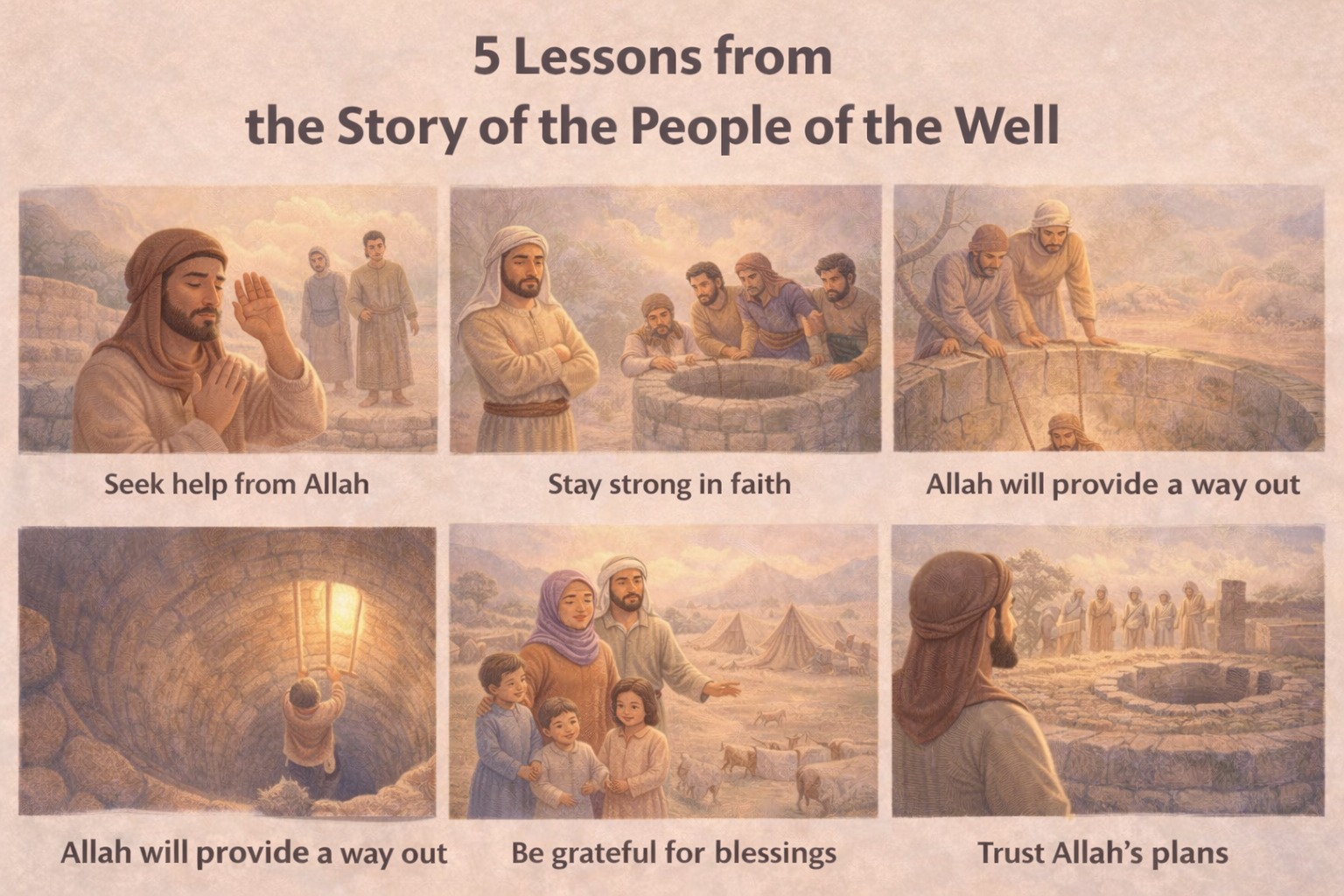

The story of the People of the Well is mentioned in Surah Al-Furqan (Verse 38) and also alluded to in other Qur’anic contexts where past nations are reminded of their destruction due to disbelief and rejection of Allah’s message. According to classical tafsir, they were a قوم (community) who rejected their prophet, persisted in wrongdoing, and were ultimately destroyed, possibly associated with a “well” or place of ruins where their remains became a sign for others.
Allah says:
“And (We destroyed) the people of the well and many generations between them…”
(Surah Al-Furqan, Verse 38)
Their story is a powerful reminder of consequences, accountability, and the importance of responding to truth before it is too late.
Here are five important lessons from their story.
1. Rejecting Guidance Leads to Destruction
One of the clearest lessons is that persistent rejection of divine guidance leads to loss.
The people of the well:
- Were given warnings
- Ignored the message of their prophet
- Continued in disobedience
This teaches us:
- Truth must be accepted when it comes
- Stubbornness in sin leads to ruin
- Guidance is a mercy, not a burden
When truth is repeatedly rejected, consequences eventually follow.
Ignoring guidance weakens both heart and destiny.
2. Signs of Allah Are Meant for Reflection, Not Neglect
Their destroyed remains became a visible sign for later generations.
This teaches us:
- History is a lesson for the living
- Signs in the world are meant to guide us
- Reflection prevents repeating mistakes
“And how many a generation before them did We destroy…”
(Surah Al-Furqan, Verse 38)
When we reflect on past nations:
- We become more conscious of Allah
- We avoid arrogance and sin
- We strengthen faith
A reflective heart learns from others’ outcomes.
3. Arrogance Prevents Acceptance of Truth
Like many destroyed nations, arrogance played a key role in their downfall.
This teaches us:
- Pride blocks guidance
- Ego leads to denial of truth
- Humility opens the heart
Allah warns repeatedly in the Qur’an about arrogant rejection.
When arrogance increases:
- The heart becomes blind
- Guidance feels heavy
- Truth becomes rejected
A humble heart is closest to guidance.
4. Accountability Before Allah Is Certain
Their destruction reminds us that accountability is real and unavoidable.
This teaches us:
- Every action has consequences
- No injustice goes unnoticed by Allah
- Life is a test, not just experience
Allah says:
“And every nation will be called to its record…”
(Surah Al-Jathiyah, Verse 28)
When you believe in accountability:
- You become more mindful
- You avoid wrongdoing
- You improve self-discipline
Awareness of judgment strengthens righteousness.
A conscious heart prepares for accountability.
5. Allah Gives Time, But Not Negligence Forever
One of the greatest lessons is that Allah gives opportunities for repentance, but does not ignore persistent wrongdoing forever.
This teaches us:
- Delay in punishment is mercy
- Time is a chance to change
- Ignoring warnings leads to consequences
Allah’s patience is not absence of justice.
When a person understands this:
- They stop delaying repentance
- They value time more
- They become more responsible
Mercy is an invitation, not permission to continue wrong.
A wise heart responds before it is too late.
Final Reflection
The story of the People of the Well is a reminder that every community and individual is accountable to Allah. It teaches that ignoring guidance, living in arrogance, and neglecting reflection leads to loss, while humility, awareness, and repentance lead to salvation.
Their example encourages us to reflect deeply before it is too late.
May Allah protect us from arrogance, guide us upon His truth, and make us among those who learn from the lessons of past nations. 🤲✨