


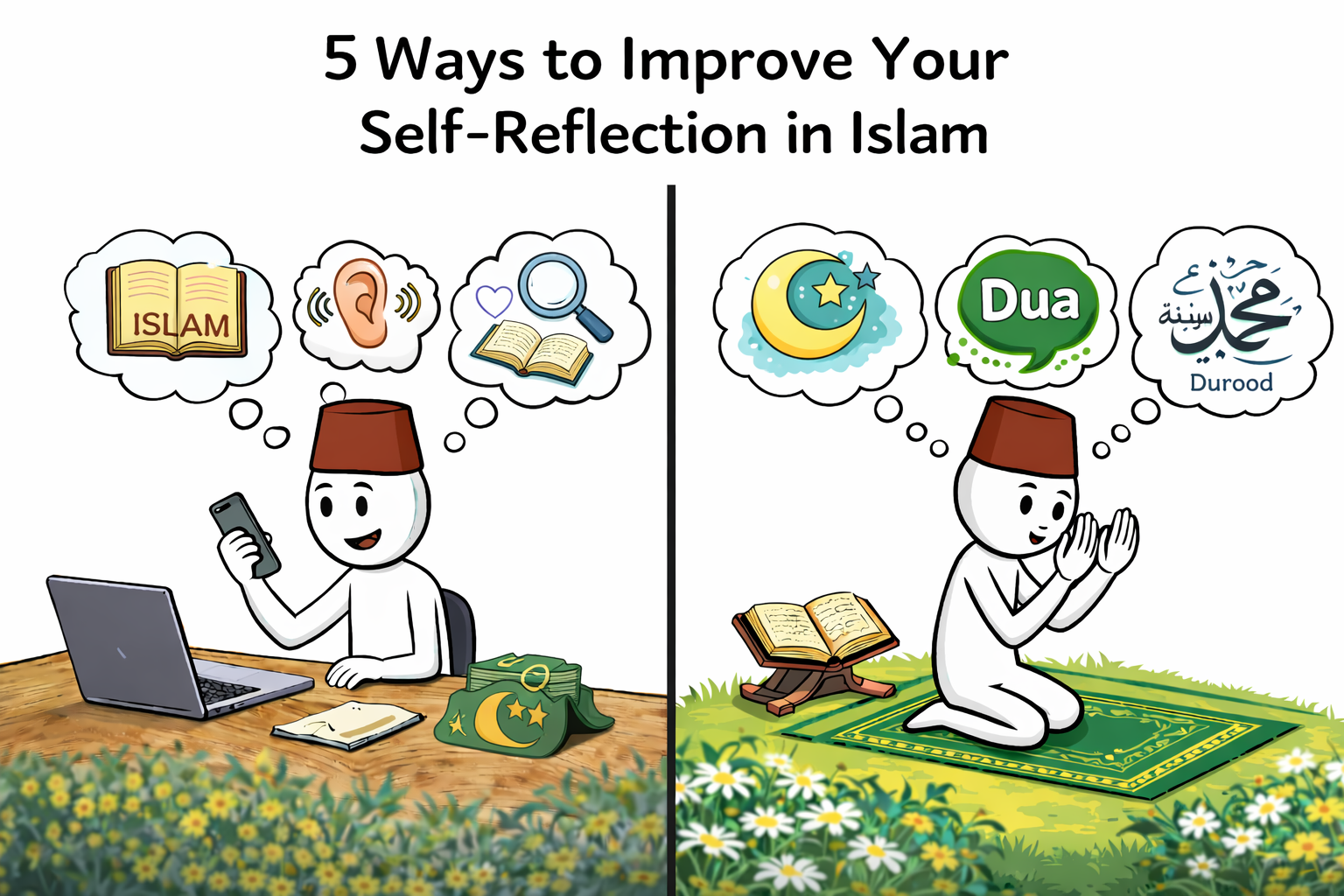

Self-reflection (muhasabah) is one of the most powerful tools for personal and spiritual growth in Islam. It is the habit of looking inward — evaluating your actions, intentions, and relationship with Allah. Without reflection, it is easy to move through life on autopilot, repeating the same mistakes and missing opportunities for growth.
Allah encourages reflection so that we become more aware and mindful:
“O you who believe, fear Allah. And let every soul look to what it has sent forward for tomorrow…”
(Surah Al-Hashr, Verse 18)
Improving your self-reflection helps you stay accountable, strengthen your iman, and become a better version of yourself.
Here are five ways to improve your self-reflection in Islam.
1. Set Aside Time Daily for Reflection
Self-reflection requires intention and time.
At the end of each day, take a few minutes to think about:
- What did I do well today?
- Where did I fall short?
- How was my connection with Allah?
This daily habit:
- Increases awareness
- Helps you recognize patterns
- Encourages improvement
Even a few minutes of consistent reflection can lead to meaningful change.
2. Be Honest with Yourself
Self-reflection only works when you are honest.
Avoid:
- Justifying your mistakes
- Ignoring your weaknesses
- Blaming others
Instead:
- Acknowledge your actions
- Accept responsibility
- Identify areas for growth
Honesty helps you improve, while denial keeps you stuck.
Growth begins when you face the truth about yourself.
3. Connect Your Actions to Your Intentions
Sometimes actions may appear good, but intentions may not be pure.
Ask yourself:
- Why did I do this?
- Was it for Allah or for people?
This helps you:
- Purify your intentions
- Improve sincerity (ikhlas)
- Strengthen your relationship with Allah
Self-reflection is not only about actions — it is also about the state of your heart.
4. Make Istighfar After Reflecting
After recognizing your mistakes, turn to Allah.
Say Astaghfirullah sincerely and make du’a for improvement.
“Indeed, Allah loves those who constantly repent…”
(Surah Al-Baqarah, Verse 222)
Istighfar:
- Cleanses your sins
- Softens your heart
- Encourages change
Reflection without repentance is incomplete.
When you combine both, you grow spiritually.
5. Set Small Goals for Improvement
Reflection should lead to action.
After identifying areas for growth:
- Set small, realistic goals
- Focus on one habit at a time
- Track your progress
For example:
- Improve focus in Salah
- Reduce negative speech
- Increase dhikr
Small changes, when done consistently, lead to lasting improvement.
Final Reflection
Self-reflection is a habit that brings awareness, growth, and closeness to Allah.
It allows you to learn from your actions, correct your mistakes, and strengthen your iman.
By setting time for reflection, being honest, checking your intentions, making istighfar, and setting goals, you can develop a strong habit of muhasabah.
Every day becomes an opportunity to improve.
The more you reflect, the more you grow.
May Allah grant us awareness of ourselves, sincerity in our actions, and the ability to continuously improve for His sake. 🤲✨