


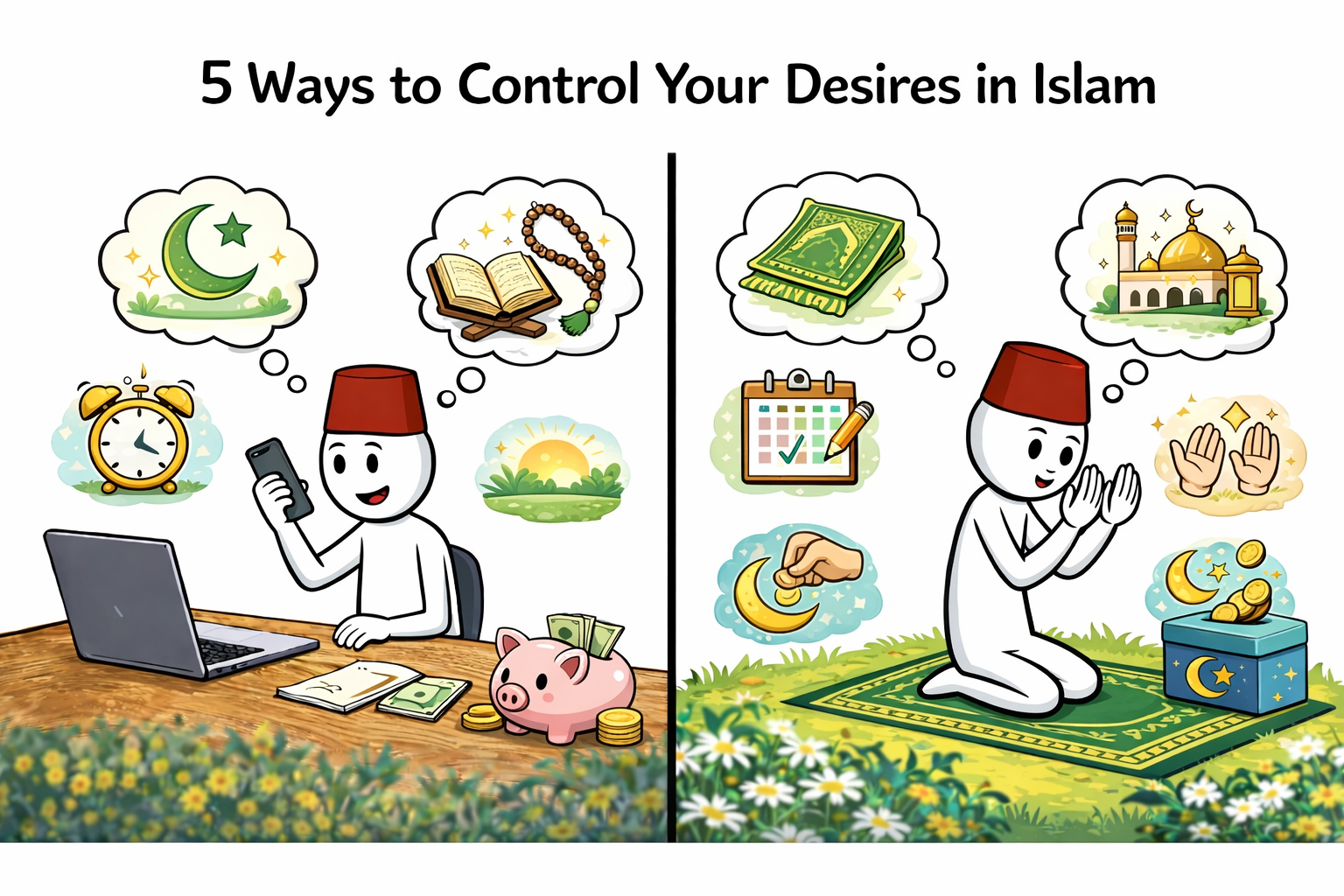

Desires are a natural part of being human. Islam does not ask us to eliminate them completely, but to control and guide them in a way that brings us closer to Allah. When desires are left unchecked, they can lead to sin, distraction, and a weakened connection with faith. But when they are controlled, they become a source of strength, discipline, and spiritual growth.
The struggle against one’s desires (nafs) is one of the greatest ongoing efforts in a believer’s life. It requires awareness, patience, and sincerity.
“But as for he who feared standing before his Lord and restrained himself from desires, then indeed, Paradise will be his abode.”
(Surah An-Nazi‘at, Verses 40–41)
Here are five powerful ways to control your desires in Islam.
1. Strengthen Your Awareness of Allah (Taqwa)
The foundation of controlling desires is taqwa — being constantly aware that Allah is watching you.
When you develop this awareness:
- You think before acting
- You avoid actions that displease Allah
- You become more mindful of your choices
Taqwa creates an internal control system.
Even when no one is around, your consciousness of Allah guides your actions.
The stronger your taqwa, the easier it becomes to resist harmful desires.
2. Control Your Environment and Triggers
Many desires are strengthened by the environment around you.
What you watch, listen to, and engage with can either increase temptation or reduce it.
To gain control:
- Avoid situations that trigger sinful behavior
- Limit exposure to harmful content
- Surround yourself with positive influences
Islam encourages prevention, not just reaction.
When you reduce triggers, you reduce the intensity of your desires.
3. Stay Consistent in Salah and Dhikr
Salah and dhikr strengthen your heart and weaken the pull of desires.
“Indeed, prayer prohibits immorality and wrongdoing…”
(Surah Al-‘Ankabut, Verse 45)
When you are consistent in worship:
- Your heart becomes more connected to Allah
- Your mind becomes more disciplined
- Your desires become easier to manage
Dhikr also helps calm the mind and reduce impulsive thoughts.
A heart that remembers Allah is less likely to be controlled by desires.
4. Practice Self-Control Through Fasting
Fasting is one of the most powerful tools for controlling desires.
It teaches you:
- Discipline
- Patience
- Self-restraint
The Prophet ﷺ recommended fasting for those who struggle with controlling their desires.
Fasting weakens physical urges and strengthens spiritual awareness.
Even outside of Ramadan, voluntary fasting can help build strong self-control.
5. Keep Yourself Busy with Purpose
Idle time often leads to increased temptation.
When your mind is not engaged, it becomes easier to fall into harmful habits.
To avoid this:
- Set meaningful goals
- Stay productive
- Engage in beneficial activities
Whether it is work, study, or acts of worship, staying busy with purpose reduces the space for desires to take over.
A focused life is a disciplined life.
Final Reflection
Controlling your desires is not about perfection — it is about effort, awareness, and consistency.
It is a daily struggle, but it is also a path to growth, strength, and closeness to Allah.
By strengthening your taqwa, managing your environment, staying consistent in worship, practicing fasting, and keeping yourself engaged in meaningful activities, you can gain control over your desires.
Every time you resist a harmful urge for the sake of Allah, you strengthen your iman.
May Allah grant us control over our desires, purify our hearts, and make us among those who choose His pleasure over temporary temptations. 🤲✨