


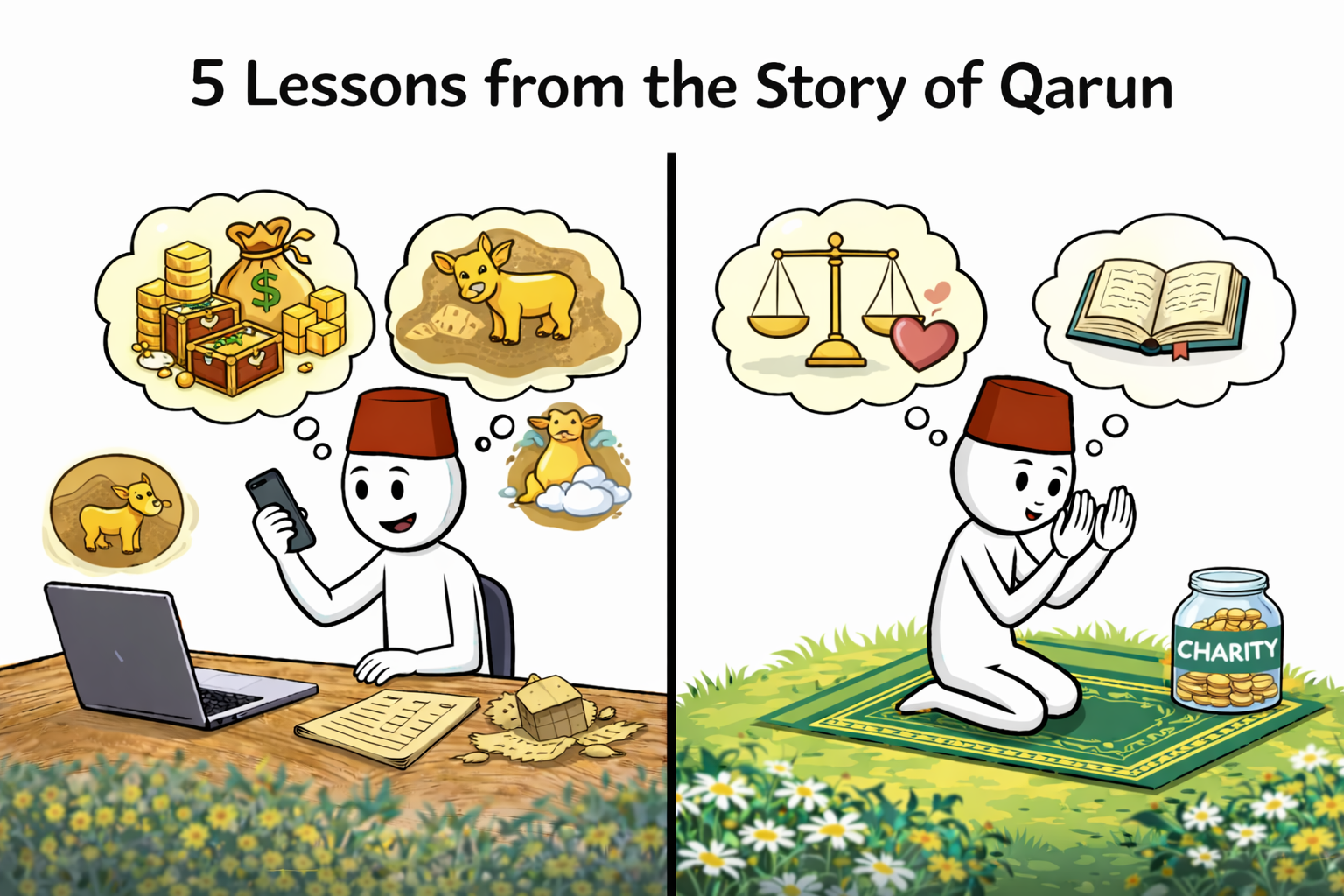

The story of Qarun is one of the most powerful warnings in the Qur’an about arrogance, wealth, and forgetting Allah. Qarun was a man from the people of Musa (AS) who was given immense riches — so much that even the keys to his treasures were heavy for strong men to carry.
Yet instead of showing gratitude, Qarun became arrogant and attributed his success to himself.
“Indeed, Qarun was from the people of Musa, but he oppressed them… And We gave him of treasures whose keys would burden a band of strong men…”
(Surah Al-Qasas, Verse 76)
His story is not just about wealth — it is about the dangers of pride, the illusion of self-sufficiency, and the consequences of turning away from Allah.
Here are five important lessons from the story of Qarun.
1. Wealth Is a Test, Not a Sign of Success
Qarun’s wealth was extraordinary, but it did not make him successful in the sight of Allah.
This teaches us:
- Wealth is a test, not a guarantee of honor
- Having more does not mean being better
- True success is in faith and obedience
In today’s world, success is often measured by material gain, but Islam reminds us that real success is in pleasing Allah.
What you have is not as important as how you use it.
2. Arrogance Can Destroy You
Qarun’s downfall began with arrogance.
When advised to be grateful, he responded:
“I was only given it because of knowledge I have.”
(Surah Al-Qasas, Verse 78)
He believed his success was purely his own achievement.
This teaches us:
- Arrogance blinds you from reality
- Pride distances you from Allah
- Thinking you are self-sufficient is dangerous
No matter how much you achieve, everything comes from Allah.
Humility protects you, while arrogance leads to destruction.
3. Gratitude Brings Blessings, Ingratitude Leads to Loss
Qarun failed to show gratitude for his blessings.
Instead of using his wealth for good, he used it to show off and elevate himself.
This shows that:
- Gratitude preserves blessings
- Ingratitude leads to their loss
- Blessings should be used in ways that please Allah
When you are grateful, Allah increases you.
When you are ungrateful, you risk losing what you have.
4. Do Not Be Deceived by the Dunya
At one point, people admired Qarun’s wealth and wished they had what he had.
But those with knowledge reminded them:
“Woe to you! The reward of Allah is better…”
(Surah Al-Qasas, Verse 80)
This teaches us:
- The dunya can be deceiving
- What looks appealing is not always good
- The Hereafter is far greater
Do not judge success based on what you see externally.
Focus on what truly matters in the long run.
5. Allah’s Justice Is Certain
In the end, Allah caused the earth to swallow Qarun and his wealth.
“So We caused the earth to swallow him and his home…”
(Surah Al-Qasas, Verse 81)
This powerful ending teaches us:
- No one is beyond accountability
- Allah’s justice will always prevail
- Arrogance and ظلم have consequences
It also reminds us that worldly power and wealth cannot protect anyone from Allah.
Final Reflection
The story of Qarun is a reminder that wealth, status, and success can become a test that either elevates or destroys a person.
It teaches us to remain humble, grateful, and aware that everything we have is from Allah.
In a world that often glorifies material success, this story brings us back to what truly matters — sincerity, humility, and obedience to Allah.
May Allah protect us from arrogance, grant us gratitude for our blessings, and help us use what we have in ways that please Him. 🤲✨