


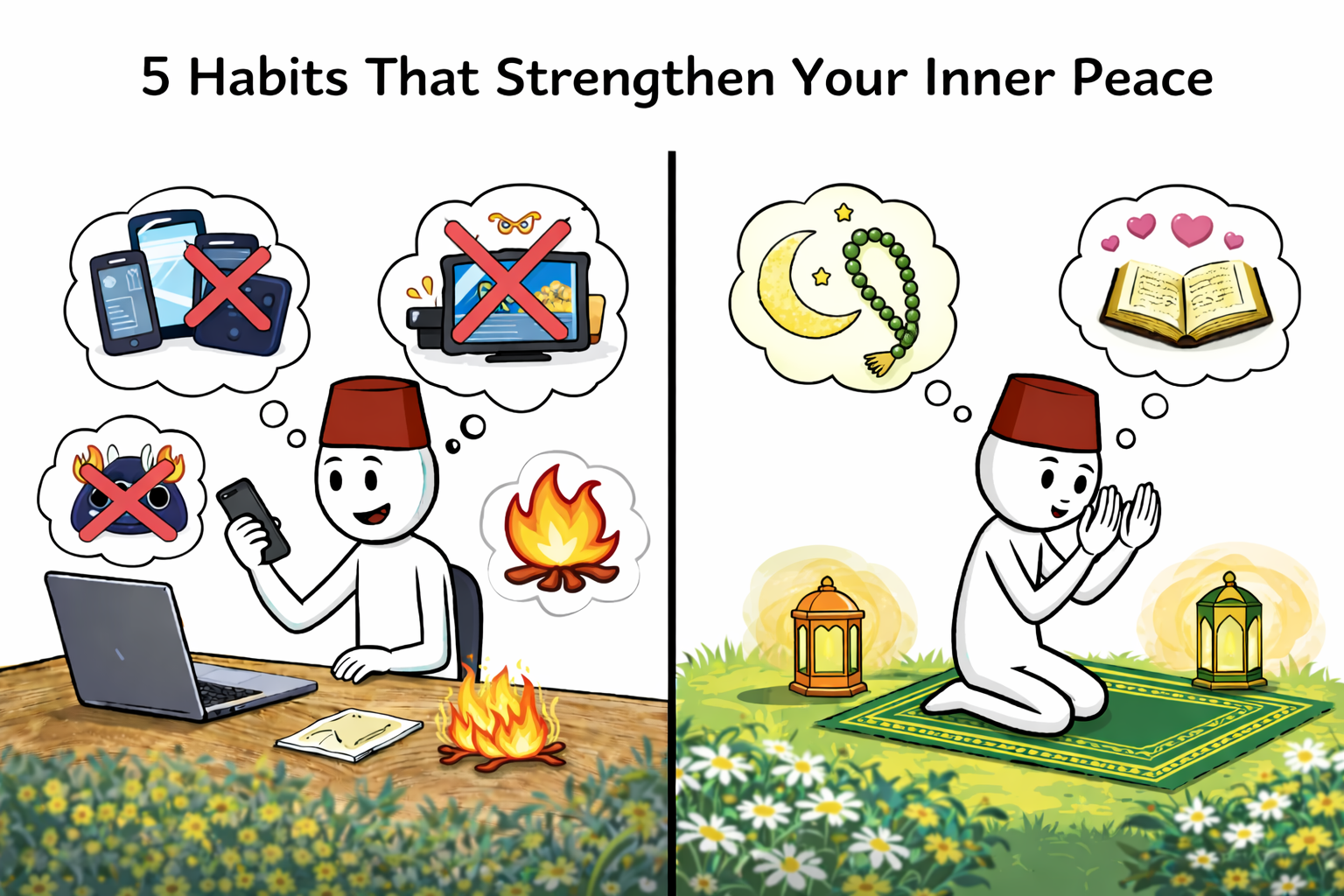

Inner peace is something many people search for, yet it often feels difficult to maintain. Stress, distractions, responsibilities, and emotional struggles can leave the heart feeling unsettled. Islam teaches us that true peace is not found in controlling every situation, but in building a strong connection with Allah and aligning our hearts with His remembrance.
A peaceful heart is not one that has no problems — it is one that knows where to turn when problems arise. It is grounded, content, and trusting, even in uncertainty.
“Verily, in the remembrance of Allah do hearts find rest.”
(Surah Ar-Ra’d, Verse 28)
Developing inner peace is a process. It requires consistent habits that nurture your heart, calm your mind, and strengthen your faith.
Here are five habits that can help you build and maintain inner peace.
1. Stay Consistent in Dhikr (Remembrance of Allah)
One of the most powerful ways to calm your heart is through dhikr.
When your mind is overwhelmed, dhikr brings you back to a place of stability and connection.
Simple phrases like:
- SubhanAllah
- Alhamdulillah
- Allahu Akbar
- La ilaha illa Allah
carry immense weight and impact.
Dhikr:
- Reduces anxiety
- Slows down racing thoughts
- Keeps your heart connected to Allah
Even a few minutes of consistent remembrance throughout the day can transform how you feel.
Over time, dhikr becomes a source of comfort you naturally turn to.
2. Strengthen Your Salah with Presence
Salah is your direct connection with Allah, and it is one of the greatest sources of peace.
However, its impact depends on how you perform it.
When you pray with focus:
- You disconnect from worldly stress
- You release your worries
- You reconnect with your purpose
“And seek help through patience and prayer…”
(Surah Al-Baqarah, Verse 45)
Instead of rushing, slow down your recitation, reflect on your words, and be mindful of your movements.
Salah then becomes a moment of relief, not just a routine.
3. Practice Tawakkul (Trust in Allah)
Much of our stress comes from trying to control things beyond our ability.
We worry about outcomes, overthink situations, and carry burdens we cannot manage alone.
Tawakkul teaches us to:
- Make effort where we can
- Trust Allah with the outcome
“And whoever relies upon Allah — then He is sufficient for him.”
(Surah At-Talaq, Verse 3)
When you truly trust Allah, your heart becomes lighter.
You realize that you are not alone, and that everything is in His control.
This trust brings deep and lasting peace.
4. Let Go of Negativity and Forgive Others
Holding onto anger, resentment, or grudges can disturb your inner peace.
These emotions weigh down your heart and keep you emotionally unsettled.
Islam encourages forgiveness and letting go.
By forgiving others:
- You free your heart
- You reduce emotional stress
- You create space for peace
Forgiveness is not about ignoring what happened — it is about choosing your own peace over holding onto pain.
A clean heart is a peaceful heart.
5. Make Du’a and Speak to Allah Regularly
Du’a is one of the most powerful tools for inner peace.
It allows you to:
- Express your worries
- Release your emotions
- Seek guidance and comfort
“Call upon Me; I will respond to you.”
(Surah Ghafir, Verse 60)
When you speak to Allah sincerely, you feel heard and supported.
You no longer carry your struggles alone.
Even in the most difficult moments, du’a provides a sense of relief and reassurance.
Final Reflection
Inner peace is not something you find once — it is something you build daily.
It comes from a heart that remembers Allah, trusts His plan, and remains free from unnecessary burdens.
By staying consistent in dhikr, improving your Salah, practicing tawakkul, letting go of negativity, and making du’a regularly, you can develop a strong and lasting sense of peace.
These habits may seem simple, but their impact is powerful when practiced consistently.
The closer you are to Allah, the more peace you will feel within yourself.
May Allah fill our hearts with peace, remove our worries, and grant us calmness and contentment in every situation. 🤲✨