


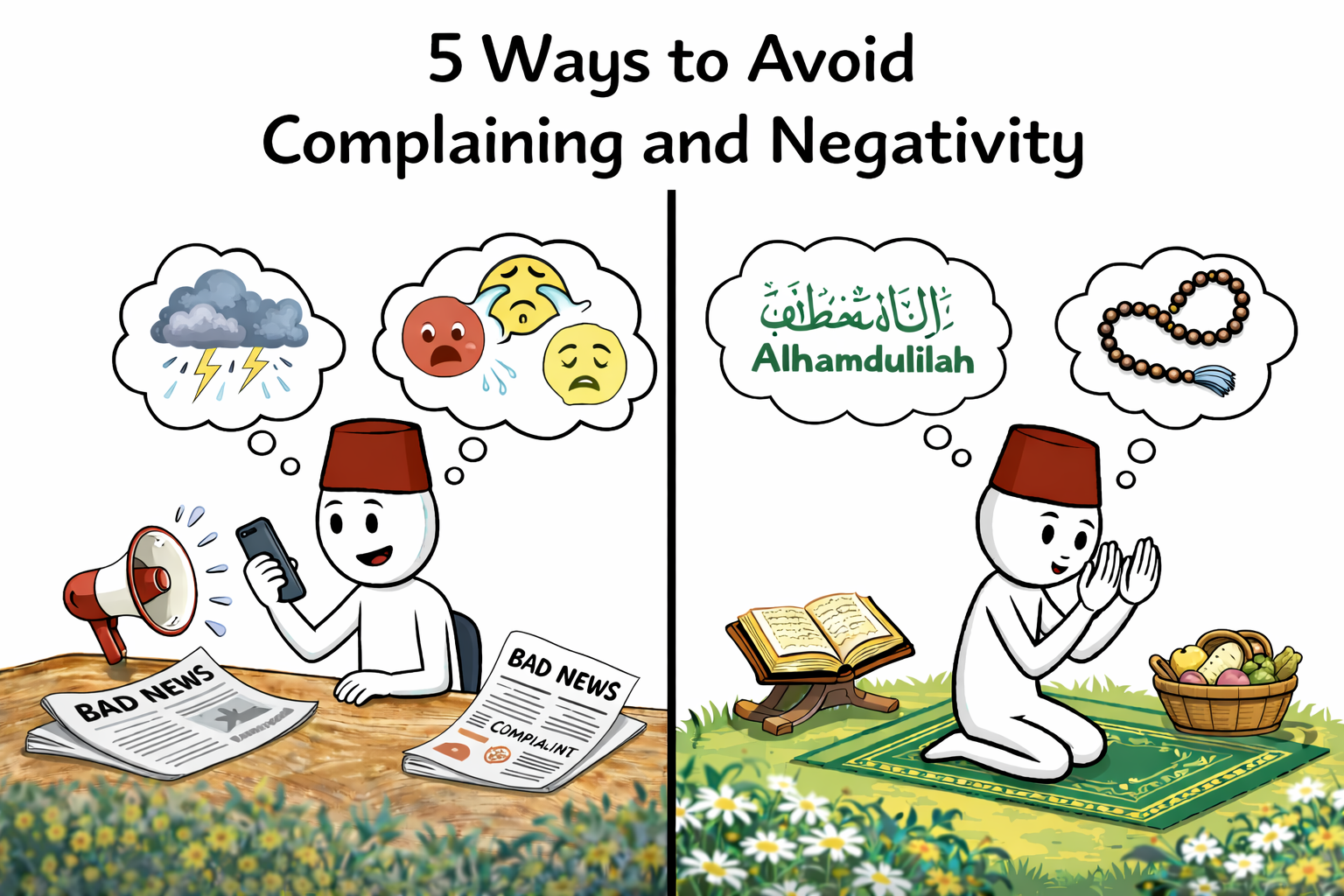

Complaining and negativity can quietly affect a person’s mindset, weaken gratitude, and distance the heart from peace. When a person constantly focuses on what is wrong, they begin to overlook the countless blessings they already have. Over time, this can lead to dissatisfaction, stress, and a loss of inner contentment.
Islam encourages believers to maintain a positive outlook, practice gratitude, and trust in Allah’s wisdom in all situations. Life will always include challenges, but how we respond to them determines our peace of mind and strength of faith.
“And if you are grateful, I will surely increase you…”
(Surah Ibrahim, Verse 7)
Here are five powerful ways to avoid complaining and negativity.
1. Shift Your Focus to Gratitude
One of the most effective ways to reduce negativity is to consciously practice gratitude.
Instead of focusing on what is wrong, try to notice what is still good:
- Your health
- Your safety
- Your daily blessings
When you train your mind to recognize blessings:
- Complaining decreases
- Contentment increases
- Your perspective becomes more positive
Gratitude and negativity cannot exist strongly in the same heart.
2. Accept That Life Contains Tests
A major source of complaining is the expectation that life should always be easy.
But Islam teaches that life is a test.
“Indeed, We have created man in hardship.”
(Surah Al-Balad, Verse 4)
When you accept this reality:
- You become more patient
- You react less emotionally
- You handle difficulties better
Not every difficulty is a problem — many are opportunities for growth and reward.
Acceptance reduces frustration.
3. Control Your Speech
Negativity often starts with the tongue.
To avoid complaining:
- Think before speaking
- Avoid repeating negative thoughts aloud
- Replace complaints with solutions or silence
The Prophet ﷺ said that whoever believes in Allah and the Last Day should speak good or remain silent.
When you control your speech:
- Your mindset improves
- Your heart becomes calmer
- You reduce negative influence on others
Words shape thoughts — and thoughts shape emotions.
4. Surround Yourself with Positive Influence
Your environment strongly affects your mindset.
If you spend time with people who constantly:
- Complain
- Criticize
- Focus on negativity
it becomes easier to adopt the same habits.
Instead, choose company that:
- Reminds you of Allah
- Encourages gratitude
- Focuses on solutions
Positive company helps you stay balanced and hopeful.
5. Strengthen Your Trust in Allah (Tawakkul)
Many complaints come from lack of trust in Allah’s plan.
When you strengthen your tawakkul:
- You become calmer in difficulties
- You accept outcomes with peace
- You stop overthinking problems
“And whoever relies upon Allah — then He is sufficient for him.”
(Surah At-Talaq, Verse 3)
Trusting Allah does not remove challenges, but it removes the heaviness of negativity.
A trusting heart complains less and rests more.
Final Reflection
Avoiding complaining and negativity is not about ignoring problems — it is about responding to them with faith, patience, and gratitude.
When you shift your focus to blessings, accept life’s tests, control your speech, choose good company, and strengthen your trust in Allah, your mindset begins to change.
A grateful and trusting heart naturally becomes peaceful and positive.
May Allah purify our tongues from complaining, fill our hearts with gratitude, and grant us contentment in every situation. 🤲✨