


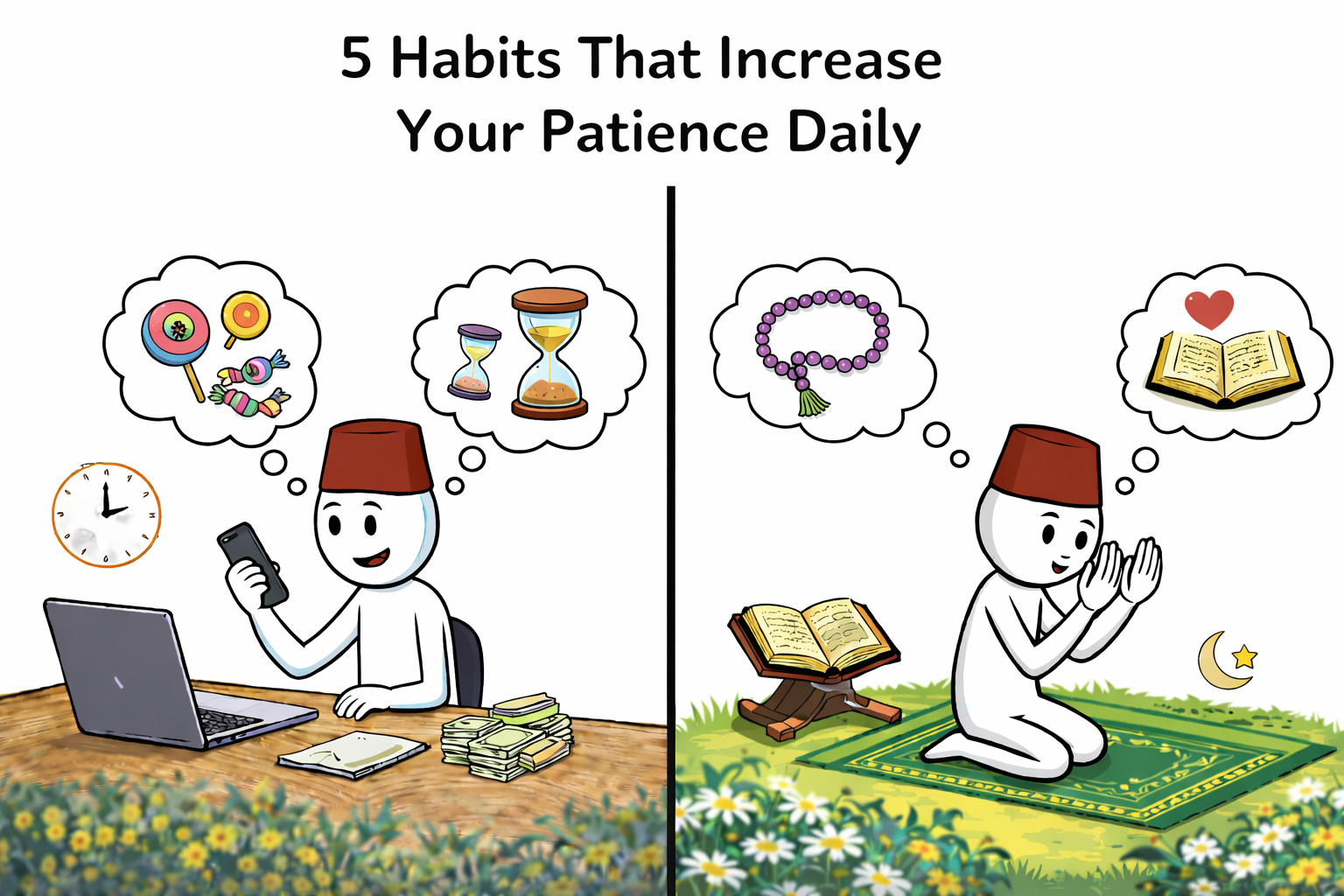

Patience (sabr) is one of the most essential qualities a believer can develop. It is not just about enduring hardship quietly — it is about controlling your reactions, staying consistent in عبادات, and trusting Allah even when things feel difficult or unclear. Every day presents situations that test your patience, whether it’s dealing with people, facing delays, or managing your own emotions.
The good news is that patience is not something you either have or don’t have — it is something you build through daily habits.
“Indeed, Allah is with the patient.”
(Surah Al-Baqarah, Verse 153)
By practicing the right habits consistently, you can strengthen your sabr and respond to life’s challenges with calmness and ایمان.
Here are five habits that can increase your patience daily.
1. Begin Your Day with Intention and Calmness
How you start your day affects your mindset for the rest of it.
If you begin your day rushed, distracted, or stressed, you are more likely to lose patience easily.
Instead, start your morning with:
- Fajr Salah
- A few moments of dhikr
- A clear intention for the day
Tell yourself:
- “I will stay calm today.”
- “I will respond with patience.”
This mental and spiritual preparation helps you approach situations with awareness.
A calm start creates a patient mindset.
2. Pause Before Reacting
One of the simplest yet most powerful habits is learning to pause.
When something triggers you — anger, frustration, or stress — your immediate reaction can either strengthen or weaken your patience.
Train yourself to:
- Take a deep breath
- Count a few seconds
- Think before speaking
This small pause gives you control over your response.
The Prophet ﷺ emphasized controlling anger, showing that patience begins with self-control.
Over time, this habit helps you avoid regret and respond more wisely.
3. Increase Your Dhikr Throughout the Day
Dhikr (remembrance of Allah) has a calming effect on the heart.
When your heart is calm, your reactions become more controlled.
“Verily, in the remembrance of Allah do hearts find rest.”
(Surah Ar-Ra’d, Verse 28)
Make it a habit to say:
- SubhanAllah
- Alhamdulillah
- Allahu Akbar
- Astaghfirullah
especially during stressful moments.
Dhikr shifts your focus from the situation to Allah, which helps you stay grounded.
A heart that remembers Allah finds it easier to remain patient.
4. Remind Yourself That This Is a Test
Every situation that requires patience is a test from Allah.
When you remind yourself of this:
- You become more aware of your response
- You feel motivated to act in a way that pleases Allah
- You see difficulty as an opportunity for reward
Instead of reacting emotionally, you begin to think:
- “This is a chance to earn reward.”
- “Allah is watching how I respond.”
This mindset transforms challenges into opportunities for growth.
5. End Your Day with Reflection and Istighfar
Patience improves when you reflect on your actions.
At the end of the day, ask yourself:
- Where did I show patience today?
- Where did I fall short?
- How can I improve tomorrow?
Then, make istighfar for your mistakes.
This habit:
- Increases self-awareness
- Helps you learn from your experiences
- Encourages continuous improvement
Over time, you will notice patterns and become more mindful in your reactions.
Final Reflection
Patience is not built in a single moment — it is built through daily effort and small habits.
Every time you control your reaction, remain calm, or trust Allah during difficulty, you strengthen your sabr.
By starting your day with intention, pausing before reacting, increasing dhikr, viewing challenges as tests, and reflecting daily, you can develop strong and lasting patience.
Patience does not remove difficulties, but it changes how you experience them.
May Allah grant us patience in every situation, strengthen our hearts, and make us among those who respond with calmness and trust in Him. 🤲✨